Renewing a sense of place
I was born and raised in Ottawa. In early 2021, I moved from Orléans to Sandy Hill to be closer to my partner and uOttawa, where I completed my undergrad. Since I moved to the East Coast in 2023, I’ve returned home several times to visit friends and family. A few years back, Ottawa stopped feeling like home. Whether it was due to the COVID-19 pandemic or the so-called Freedom Convoy hardly matters. I always enjoy spending time with my loved ones when I return to the capital, but over the course of my previous visits, the city felt foreign to me—empty. But this time was different. This time I felt something.
Ottawa’s a strange place. On one hand, it’s beautiful. Its countless trails, parks, and coffee shops captivate both tourists and locals. Compared to other Canadian cities, its ability to foster work-life balance is ideal. And its location between Canada’s two largest cities is convenient to say the least. On the other hand, Ottawa’s a dark place. Its gothic revival architecture and bronze statues disguise themselves as vestiges of colonialism, erasing ongoing harms. The city’s wealth disparity continues to grow as luxury condos increasingly push vulnerable populations away from their homes and toward overcrowded shelters. Where the fertile lands of the St. Lawrence Lowlands once stood, multinational commercial retailers now capitalize from consumerism. Yet despite its flaws, Ottawa is, and always will be, one of my homes.
So what makes a place feel like home? How should we value (or disvalue) landscapes that inherit complex legacies—that simultaneously make us feel at peace and uneasy? These are some of the questions I intend to bring back to the East Coast with me.
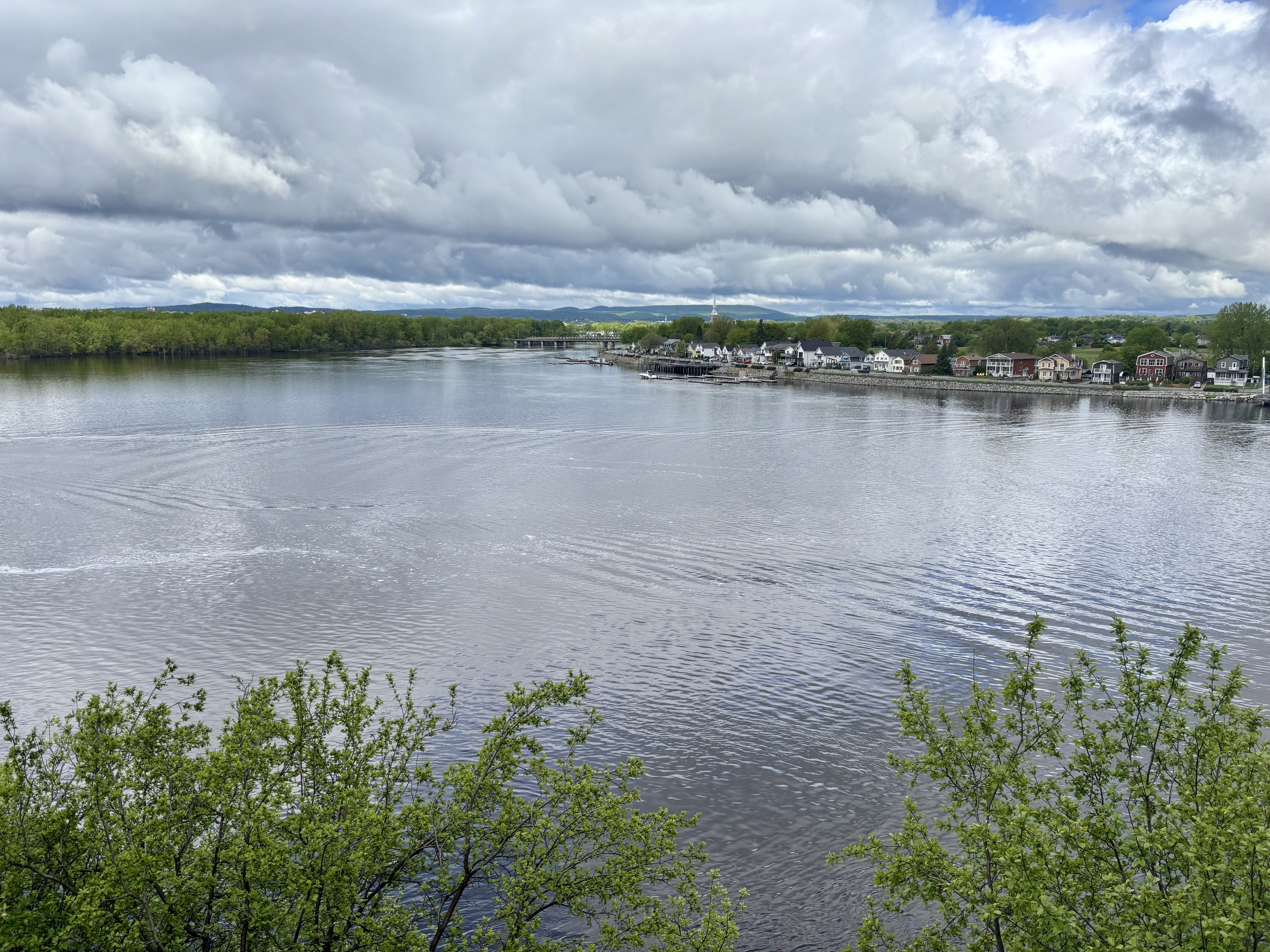
The confluence of the Ottawa and Gatineau rivers. The hills of the Canadian Shield appear in the background. I took this photo in May 2025.
 Alexandre Legault
Leave a comment